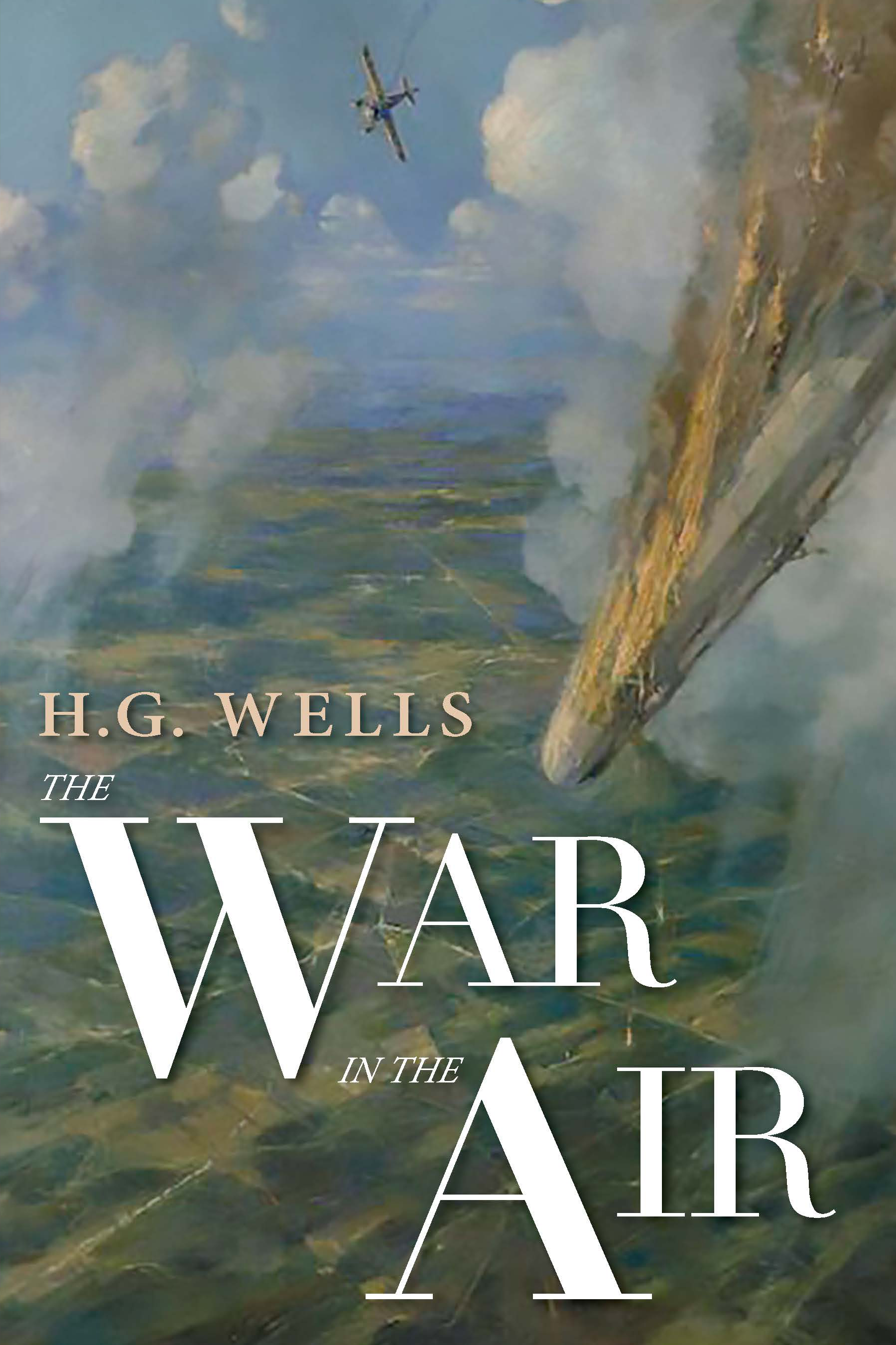
It is of big importance to know the time frame in which this book was written. It was published in 1908. That is 6 years before the first world war started. The story commences in a fictional 1910’s Great Britain. Main protagonist is Bert Smallways, a keen mechanic who runs a shop with his brother.
The story portrays the rapid scientific advancements in all aspects of society. High rise mono railways have entirely replaced the old horse based modes of transport. In the wake of these events their business loses its relevance, and they finally decide to move into the entertainment business. In parallel the world’s powers have been individually preparing flying machines outside the public’s eye. Occasionally the citizens bear witness to airships taking flight, but the kind of newer airplanes are kept secret. The eccentric inventor Butteridge has created a working flying machine but tries his best to keep it under closure.
By chance this famous inventor crosses ways with the two brothers while taking a balloon ride with his mistress. Close to the ground the balloon can’t hook onto the ground which makes it impossible for it to land. The brothers and bystanders can successfully take hold of the rope trailing the balloon and ground it. Defying all logic the two passengers exit the device and simultaneously Bert accidentally enters the balloon and takes off on a lonely, involuntary journey across Europe. After lots of literal ups and downs he enters the restricted German aeronautic park and gets captured just before they are taking off for their attack on the United States. Initially mistaken for the famous inventor himself he is faced with angered Germans who have reluctantly taken him on their crusade.
The German fleet of airships lays waste to cities and is also successful in subjugating Americans albeit temporarily. The overwhelming air fleet is able to destroy any resistance the Germans face but simply insufficient to control territory. This is most likely the biggest take-away the book offers the reader in light of its historic context. The depiction of aerial warfare as a means of destruction has first been seen in the first world war. Airplanes were mostly used in reconnaissance missions and later in the war for other duties. The use of strategic bombing can be seen in the Spanish Civil War. Here Germans tested their new airplanes against republican forces. The bombing of Guernica, which wasn’t the intended target but was leveled to the ground on accident due to poor vision, facilitated the advance of nationalist troops. As seen in the second world war many cities faced the devastating effects of strategic bombing. The infamous long winding sounds of falling bombs is an invention of the German Luftwaffe made possible by equipping each device with a whistle.
As in history, the bombing loses its effectiveness as soon as the local governments fall into disarray rendering all power exerted from the air useless in the long run, without authorities on the ground to coerce the population into compliance. For the German’s surprise the rest of the world hasn’t slept, and the Asiatic attack coincides with the German advance. All around the world population centers are dragged into the conflict. Ultimately, humanity gets thrown back into darker times.